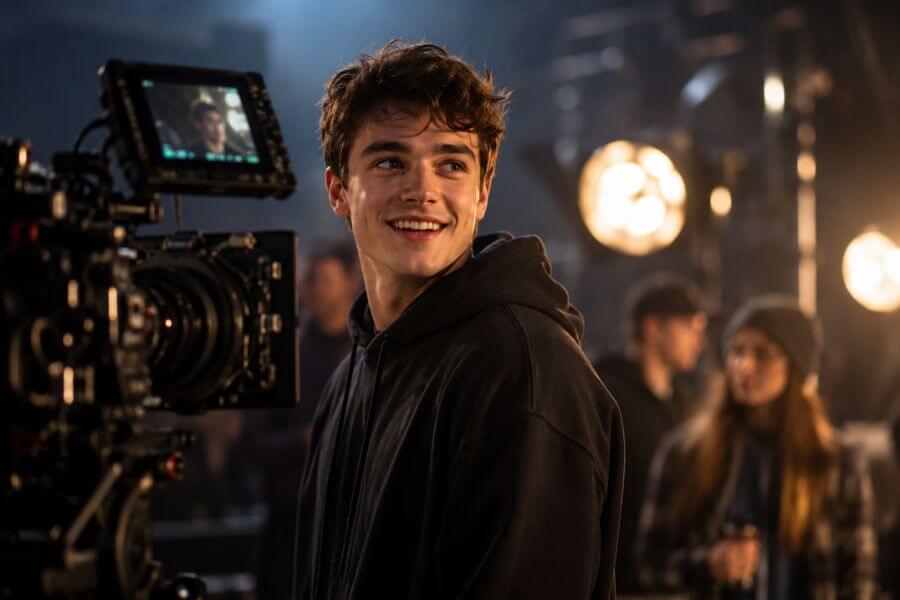
Key Takeaway: The New Hollywood Reality
The traditional walls of Hollywood have officially crumbled. For decades, breaking into the film and television industry required a standard path: finding an agent, moving to Los Angeles, and enduring endless rounds of auditions for tiny roles. Today, a new wave of talent is bypassing the gatekeepers entirely. By building massive, deeply loyal audiences on platforms like YouTube, TikTok, and Twitch, internet creators are transitioning directly into leading roles, directing major studio projects, and writing prime-time television shows. This shift is not a temporary trend. It represents a fundamental restructuring of how entertainment is created, funded, and consumed.
The Shift in Entertainment Gatekeepers
Think about the last time you discovered a new favorite actor or director. Decades ago, that discovery happened because a powerful studio executive, a talent scout, or a casting director decided to give an unknown person a chance. These gatekeepers held all the keys to the kingdom. They decided who got to speak, who got to perform, and what stories reached the public. If you did not fit their specific mold, your chances of success were incredibly low.
The rise of high-speed internet and free video platforms changed everything. Suddenly, anyone with a smartphone and a unique perspective could distribute their work to the entire world without asking for permission. This democratization of media meant that the audience became the ultimate gatekeeper. If people loved your humor, your storytelling, or your personality, they followed you. You did not need a multi-million-dollar marketing campaign when you had millions of dedicated fans waiting for your next upload.
Hollywood studios quickly noticed this massive shift in human attention. As traditional television viewership numbers began to slide, studio executives realized they needed to go where the eyeballs already were. Internet creators do not just bring talent to a traditional film set; they bring a pre-built marketing machine. When a studio hires a creator with ten million followers, they are guaranteed that a massive segment of that audience will tune in on day one. This economic reality has forced the traditional entertainment industry to rewrite its entire playbook.
Understanding the Journey from Pixels to the Big Screen
The transition from making short videos in a bedroom to managing a massive crew on a Hollywood set is a fascinating journey. It requires a completely different set of skills, yet the core principles of entertainment remain exactly the same. At its heart, whether you are making a sixty-second clip or a two-hour feature film, you must know how to capture and hold human attention.
Many of the most successful creators began their journeys as hobbies. They experimented with editing, pacing, and performance in a low-stakes environment. If a video failed, they simply learned from the data and tried a different approach the next day. This rapid cycle of feedback allowed internet talent to develop a sharp sense of what connects with everyday people. Unlike traditional actors who might wait years between major projects, top digital creators have spent a decade producing content on a weekly or even daily basis.
When these individuals step onto a professional movie set, they often bring a level of resourcefulness that surprises industry veterans. Because they spent years acting as their own writers, directors, cinematographers, and editors, they possess a holistic understanding of production. They know how a specific camera angle will look in the final edit, and they understand how to tweak a line of dialogue on the fly to make it hit harder. This deep, hands-on experience makes them incredibly adaptable when working within the complex machinery of a major studio production.
The Business Behind the Audience Transition
To truly understand why this migration is happening, you have to look at the financial numbers. The entertainment business is built on managing risk. Producing a major television series or a feature film requires an investment of millions of dollars. In the past, studios relied on star power to guarantee a return on that investment. They would hire a household name, hoping that the actor’s reputation would draw crowds to the theater.
In the current media landscape, traditional star power does not work the way it used to. Audiences, especially younger generations, are less likely to see a movie simply because a famous older actor is on the poster. They want a sense of community and personal connection. Digital creators offer exactly that. Their fans feel a deep sense of personal investment in their success because they watched them grow from an amateur creator into a major star.
Traditional Casting Risks Versus Creator Casting Advantages
| Traditional Casting Approach | Creator Casting Approach |
| Relies heavily on costly billboard and television advertisements | Leverages organic, free promotion through social media channels |
| Targets a broad, generalized demographic with mixed results | Targets a highly specific, passionately engaged fan community |
| High financial risk if the lead actor lacks current cultural relevance | Lower financial risk due to guaranteed baseline viewership |
| Talent often has limited direct interaction with the consumer base | Talent maintains a daily, direct conversation with millions of fans |
When a studio calculates the cost of marketing a new project, having an internet creator in a leading role slashes their advertising budget significantly. The creator can post a single trailer to their personal channel and generate more organic excitement and views in twenty-four hours than a traditional PR campaign could achieve in a month. This built-in distribution network makes creators an incredibly attractive option for risk-averse studio executives who need to guarantee high viewership numbers.
Redefining the Acting Profession in the Digital Age
The definition of a professional actor has evolved dramatically over the last ten years. There was a time when serious performers looked down on internet content, viewing it as low-quality or amateurish. That snobbish attitude has largely disappeared as creators continue to deliver powerful, critically acclaimed performances in mainstream projects.
Acting for the internet actually requires an advanced level of authenticity. Digital audiences can spot fake behavior or forced emotions instantly. Because the camera is often just inches from the creator’s face in a bedroom setting, they develop an intimate, understated style of performance. When transitioned to the big screen, this natural approach often translates into deeply relatable and grounded characters.
Furthermore, internet talent is accustomed to playing multiple characters and experimenting with different genres. A single creator might play five different roles in a comedy sketch, managing the comedic timing, physical humor, and vocal inflections for each one. This versatility serves them well when they enter the world of mainstream film and television, where they are often asked to bring fresh, unexpected energy to conventional scripts.
Directors and Writers Changing the Visual Landscape
It is not just actors who are making the leap from online platforms to Hollywood. A significant number of internet directors and writers are gaining control of major studio projects. These filmmakers bring a distinct visual language that was forged in the fast-paced world of online video.
Online directors learned their craft in an environment where the viewer can click away at any second. This reality taught them to value tight pacing, inventive visual transitions, and engaging hooks. When these directors receive access to Hollywood budgets, professional crews, and high-end equipment, the results are often spectacular. They combine their sharp, modern sensibilities with classic filmmaking techniques to create projects that feel incredibly fresh and urgent.
Evolution of Media Production Techniques
- Pacing and Editing: Traditional projects often favor slow, atmospheric world-building. Internet-trained filmmakers tend to use snappy editing and visual subtext to convey information rapidly, keeping modern audiences engaged.
- Visual Style: Digital creators are masters of using natural lighting and creative camera movements due to their early budget constraints. On a Hollywood set, this translates to a gritty, immediate, and immersive visual style.
- Story Development: Traditional writing often follows rigid structural formulas. Writers from the internet space are used to breaking the fourth wall, experimenting with non-linear timelines, and blending genres in unexpected ways.
This influx of new creative blood is revitalizing genres that had started to feel stale, such as horror, action, and independent comedy. By challenging traditional ideas about how a story should be told and visually presented, digital filmmakers are helping the mainstream industry adapt to the tastes of a new generation of viewers.
The Power of Community Over Traditional Stardom
The concept of a celebrity has undergone a massive transformation. Traditional movie stars maintained an aura of mystery. They were distant, untouchable figures who only appeared in public during red-carpet events or highly coordinated late-night talk show interviews. While this mystery was alluring in the twentieth century, today’s audiences desire something entirely different: accessibility.
Internet creators built their careers on accessibility. They take their fans behind the scenes of their daily lives, share their personal struggles, and talk directly to their audience through comment sections and live streams. This creates a powerful psychological phenomenon known as a parasocial relationship, where the viewer feels a genuine friendship with the creator.
When a fan feels like they are friends with a performer, their loyalty is incredibly strong. They will buy tickets to a movie, subscribe to a new streaming service, or watch a television show simply to support that person’s journey. Traditional Hollywood stardom cannot replicate this level of personal devotion. A studio can spend millions of dollars trying to make the public care about a new actor, but they cannot manufacture the genuine bond that a creator builds over years of daily interaction.
Overcoming Stigma and Industry Resistance
Despite the clear financial and creative benefits, the road from online videos to Hollywood has not been without serious obstacles. The traditional entertainment industry is notoriously conservative and slow to change. For a long time, there was a strong resistance against giving major opportunities to individuals who got their start on social media.
Many industry veterans assumed that internet fame was shallow and fleeting. They believed that a person who was successful at making short, comedic clips could not handle the pressure of a professional set or deliver a sustained performance in a ninety-minute narrative. Creators often had to work twice as hard to prove their artistic worth and overcome the stereotype of being just an internet personality.
To break through this skepticism, creators began producing independent projects that mirrored the quality of Hollywood productions. They used their own money to fund high-concept short films, web series, and documentaries. When these independent projects started winning awards and earning critical praise, the traditional industry could no longer ignore their talent. The narrative shifted from viewing creators as amateurs to recognizing them as independent entrepreneurs who mastered production outside the studio system.
Case Studies: Pioneers Who Broke the Mold
To understand the full scale of this movement, it helps to examine specific individuals who successfully navigated the transition. These pioneers did not just get minor cameo appearances; they fundamentally altered their career trajectories and established themselves as major creative forces in mainstream Hollywood.
Consider the creators who started by making simple sketches with their friends on YouTube. Over several years, they focused on refining their writing and directing skills, eventually attracting the attention of independent film studios. By staying true to their unique, often surreal sense of humor, they managed to transition into writing and directing feature-length films that received widespread critical acclaim and box office success.
Another powerful example can be found in the world of online horror and thriller creators. Filmmakers who began by uploading short, suspenseful videos made on shoestring budgets proved they understood tension better than many seasoned Hollywood directors. When given the opportunity to direct major studio horror films, they delivered massive commercial hits, proving that their understanding of fear and suspense was perfectly scalable to the big screen.
The Technical Edge: Digital Literacy on Set
One of the biggest advantages that digital-native creators possess when entering mainstream Hollywood is their advanced technical literacy. In the traditional system, an actor acts, a director directs, and an editor edits. These roles are strictly separated by union rules and historical habits. Internet creators, however, grew up in an environment where they had to do everything themselves.
This multi-faceted background gives them a unique language when communicating with various departments on a professional set. When a creator-turned-director talks to the director of photography, they understand the technical details of lenses, lighting set-ups, and camera sensors. When they talk to the post-production team, they know exactly how the footage will be manipulated in the editing software.
Skillset Comparison: Digital Creators Versus Traditional Talent
| Functional Skill Area | Digital-Native Creators | Traditional Hollywood Talent |
| Video Editing and Pacing | Deep hands-on experience with industry-standard editing software | Rarely involved in the technical, day-to-day post-production process |
| Audience Data Analysis | Regular analysis of real-time viewer retention metrics and feedback | Relies entirely on third-party market research and box office reports |
| Multi-Department Workflow | Years of acting as writer, director, and technical crew simultaneously | Specializes strictly in a single creative role within the production |
| Marketing and Distribution | Direct control over personal, multi-million-user broadcast networks | Dependent on studio public relations teams and traditional press tours |
This deep technical knowledge prevents a lot of miscommunication and speeds up the production process. Creators are used to working quickly and efficiently. They know how to solve problems on the fly because they have spent years fixing audio issues, adjusting lighting with limited tools, and finding creative workarounds for budget limitations.
How Streaming Services Accelerated the Convergence
The explosion of subscription-based streaming platforms acted as a massive catalyst for this cultural convergence. As companies rushed to launch their own streaming services, the demand for original content reached an all-time high. Traditional Hollywood production companies simply could not move fast enough to fill the endless demand for new shows and movies.
Streaming platforms needed creators who could deliver high-quality content quickly and cost-effectively. They also needed to attract a younger demographic that was completely ignoring traditional cable television. Turning to internet creators was the perfect solution. Streaming executives began greenlighting projects created by, starring, or directed by digital talent.
Because streaming platforms rely heavily on algorithm-driven recommendations, they recognized the value of the data that creators possessed. A top YouTuber understands exactly when their audience drops off, what titles make people click, and what thumbnails attract the most attention. This analytical mindset aligned perfectly with the data-driven strategies of modern tech-heavy streaming giants, creating a natural partnership that has resulted in some of the most popular streaming content of recent years.
The Changing Metrics of Hollywood Success
For nearly a century, the success of a movie was measured by a single metric: the weekend box office numbers. For a television show, it was the live viewership ratings. While these numbers still carry weight, the industry has been forced to adopt a much more complex and holistic set of metrics to evaluate the value of talent and content.
Today, cultural relevance is heavily measured by social media engagement, online conversation, and viral trends. A film might have a modest opening weekend in theaters, but if it becomes a massive trend on video-sharing apps, its long-term profitability through streaming and merchandise can skyrocket. Studio executives now look closely at a talent’s digital footprint before making casting decisions.
This shift in metrics has leveled the playing field for internet creators. An actor who has spent years working in small theater productions might have incredible talent, but an internet creator with a verified track record of generating hundreds of millions of views offers a measurable data point of public interest. In a highly competitive industry where millions of dollars are on the line, data often wins the argument.
The Evolution of Representation and Talent Agencies
The rise of digital creators breaking into traditional media has forced Hollywood talent agencies to completely transform their business structures. Historically, the big talent agencies focused entirely on actors, models, classical musicians, and traditional writers. When internet stars first started gaining millions of followers, these agencies did not know how to handle them.
That quickly changed as the revenue potential of the digital space became undeniable. Every major talent agency in Hollywood now features a massive, dedicated digital media department. These agents are tasked with scouting online talent, managing their brand partnerships, and actively looking for opportunities to package them into traditional film and television deals.
This evolution has changed how talent is discovered. Agents no longer spend all their time sitting in small showcases or reviewing physical headshots. Instead, they employ teams of scouts who monitor trending algorithms, analyze engagement rates, and track rising digital stars across various video platforms. If a creator starts going viral and shows a genuine capacity for storytelling, chances are high that a Hollywood agent will be in their email inbox within a week.
Adapting to the Scale of Mainstream Productions
While digital creators bring an incredible skillset to Hollywood, the transition requires a significant psychological and professional adjustment. Making a video with a two-person crew in a house is a completely different universe compared to walking onto a studio backlot with hundreds of union crew members, complex safety regulations, and massive financial oversight.
One of the biggest challenges for creators is learning to delegate authority. When you are used to controlling every single frame, every line of dialogue, and every edit, it can be terrifying to hand those responsibilities over to specialized departments. A creator-turned-director must learn to trust the costume designer, the set decorator, and the sound engineer to execute their vision.
[Bedroom Video Production] -> Tiny Crew, Total Control, Instant Execution
                                      |
                                      v
[Mainstream Studio Project] -> Massive Union Crew, Specialized Roles, Layered Approval
The physical and mental endurance required for a Hollywood production is also a major adjustment. Film sets operate on grueling schedules, often requiring fourteen-hour workdays for months at a time. The pacing is much slower than what a digital creator is accustomed to. In the online world, an idea can be conceived, shot, edited, and published in forty-eight hours. In Hollywood, a project can spend years in development before a single camera rolls. Learning to maintain creative energy and focus over such a long timeline is a crucial step in a creator’s professional maturity.
The Global Impact of Digital-Native Filmmakers
Internet platforms are inherently global. A teenager uploading a video from their bedroom in Australia can instantly reach an audience in the United States, Brazil, Japan, and the United Kingdom. Because of this international reach, digital creators often develop a deep understanding of global pop culture and universal human emotions.
When these creators transition into making mainstream films and television shows, their work often carries a strong international appeal. Traditional Hollywood has occasionally struggled to make content that translates well across different cultures without relying on generic action sequences. Digital-native filmmakers, however, are used to communicating with a diverse, global fanbase every single day.
This global perspective is helping to diversify the types of stories being told in mainstream media. Creators from different backgrounds, countries, and walks of life are bringing their unique cultural experiences to Hollywood. This is leading to a richer, more vibrant entertainment landscape where audiences from all over the world can see their own realities reflected on screen in high-quality, big-budget productions.
Future Horizons: What the Next Decade Holds
The boundary line between the internet and Hollywood will continue to blur until it eventually disappears entirely. We are moving toward an entertainment landscape where talent is simply talent, regardless of where they got their start. The idea of a strict distinction between an internet celebrity and a movie star will soon feel incredibly outdated.
As technology continues to advance, the tools required to make cinema-quality content will become even more accessible to everyday creators. This means the quality of independent online content will continue to rise, making the leap into mainstream Hollywood even more seamless. We will likely see a future where top creators alternate between making massive studio feature films and producing independent content for their personal channels, maintaining total creative freedom.
Furthermore, studios will continue to experiment with interactive media, virtual reality, and new forms of storytelling that digital creators are uniquely qualified to lead. The creators who understand how to engage an audience across multiple platforms simultaneously will be the most valuable assets in the entertainment industry. The future of Hollywood belongs to those who know how to build, maintain, and respect a community of passionate fans.
Frequently Asked Questions
Why are Hollywood studios hiring internet creators instead of traditional actors?
Studios are facing intense competition for human attention. Internet creators bring a massive, pre-built audience that is deeply loyal. This significantly reduces the financial risk of a project, as the creator’s fans are highly likely to watch the film or show on day one, saving the studio millions of dollars in traditional advertising and marketing costs.
Do internet creators have the technical skills to handle a major movie set?
Yes. Most creators spent years acting as their own writers, directors, camera operators, and editors. This hands-on experience gives them a comprehensive, practical understanding of filmmaking. Their deep digital literacy allows them to communicate effectively with all the technical departments on a professional Hollywood set.
What is the biggest challenge a digital creator faces when moving to Hollywood?
The biggest challenge is adapting to the massive scale and slower pace of traditional production. Creators are used to total creative control and rapid execution. On a Hollywood set, they must learn to delegate tasks to hundreds of specialized crew members and navigate complex studio approval systems, all while maintaining their creative energy over a production timeline that can last for months or even years.
How has this shift changed the way talent agencies look for new stars?
Talent agencies have created massive digital media departments specifically to scout online talent. Instead of relying solely on traditional theater showcases or headshots, modern talent scouts use data analytics, monitor viral trends, and study audience engagement metrics to identify rising digital creators who have the potential to succeed in mainstream film and television.
Will traditional movie stars disappear because of internet creators?
Traditional movie stardom is not disappearing, but it is evolving. Audiences now place a premium on authenticity, transparency, and direct communication. Traditional actors are being forced to adopt some of the community-building strategies of digital creators, while creators are adopting the professional training of traditional actors, leading to a hybrid model of modern celebrity.