Imagine waking up to find you are the star of a new movie you never filmed. Imagine walking into a store and hearing your own voice sell a drink you have never tasted. For many famous people, this nightmare is already real. The growth of artificial intelligence (AI) has brought a new kind of threat. It is the ability to clone how a person looks and sounds with just a few clicks.
This technology can take a short recording of your voice or a few pictures of your face and make a digital copy. This copy can say anything, go anywhere, and do anything on a screen. For movie stars, singers, and sports icons, this is a massive battle. They are fighting for the rights to their own bodies and voices.
But this is not just a problem for billionaires and Hollywood stars. The tools used to clone celebrities are open to everyone. What happens to famous people today could happen to you tomorrow. This blog post looks deep into the fight for digital rights, how AI cloning works, and what it means for the future of humanity.
Key Takeaways: What You Need to Know Right Now
Before diving into the full story, here are the most important points about the battle over digital rights:
- The Threat is Real and Present: AI can now clone human voices and faces with perfect accuracy using very little data.
- The Law is Far Behind: Current laws do not protect a person’s digital self very well, leaving a large gap for tech companies to use.
- Celebrities are Leading the Fight: Famous actors, musicians, and creators are suing companies and pushing for new laws to protect everyone.
- It Affects Everyone: If a company can clone a celebrity without permission, they can do the same to any regular citizen.
- The Future Requires New Rules: We need national and global rules to make sure our faces and voices belong to us forever.
The Magic and Mystery Behind AI Voice and Likeness Cloning
To understand the fight, you first need to understand the technology. AI cloning does not use magic. It uses computer programs called neural networks. These programs look at large amounts of data, like hours of interviews or thousands of photos, to learn patterns.
How Voice Cloning Works
A computer program listens to the way a person speaks. It notes the high and low tones, the pauses, the accent, and the way words join together. Once the program learns these patterns, a user can type any text into the computer, and the AI will speak that text using the cloned voice.
How Likeness Cloning Works
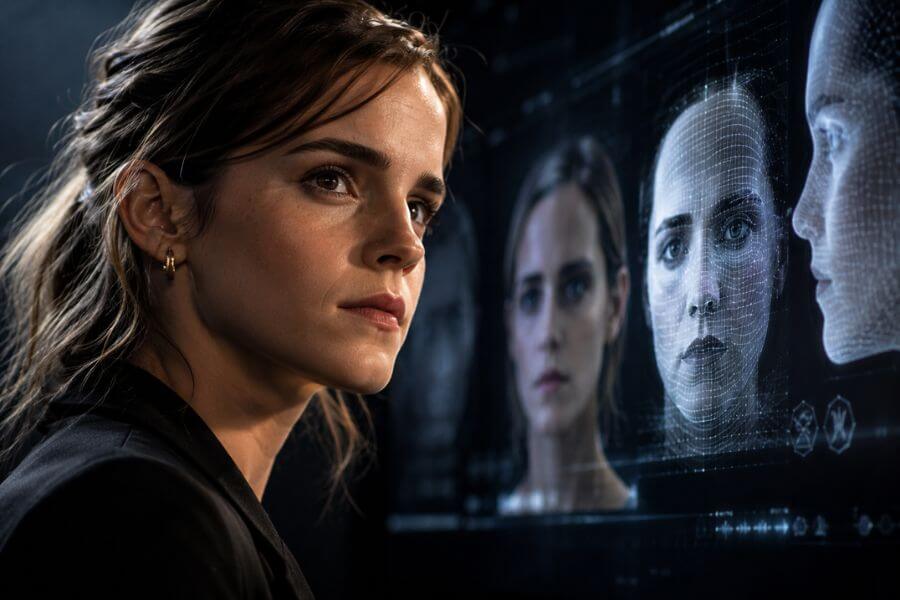
This is often called a deepfake. The computer looks at videos of a person from many angles. It learns how their eyes move, how their skin wrinkles when they laugh, and how their lips shape different words. The program can then paste this digital face onto another actor’s body in a video.
The Speed of Modern Tech
A few years ago, a computer needed weeks of data to make a bad copy. Today, an AI can make a scary good copy using a ten-second audio clip or a single clear photo. This speed is what makes the technology so powerful and so dangerous.
Why Celebrities are on the Front Lines of This War
Famous people are the first targets because their data is everywhere. You can find millions of interviews, movies, and songs online. This gives the AI programs a perfect library of material to learn from.
The Loss of Jobs and Income
Actors and voice actors make a living from their unique talents. If a video game company can use an AI clone of a famous voice instead of hiring the real person, that actor loses a job. This is not a future worry. It is happening right now in games, audiobooks, and commercials.
Protecting a Good Name
Celebrities spend decades building their image. If an AI clone appears in a political advertisement or an unsafe video, it can ruin a career in minutes. The real person has no control over what their digital clone tells the world.
The Question of Moral Rights
Beyond money and fame, there is a deep human element. Your face and voice are parts of your identity. Seeing a digital puppet wear your face without your permission feels like a violation of your basic human rights.
The Legal Battlefield: Where the Laws Fall Short
The current legal system was built for a physical world, not a digital world where humans can be copied perfectly. Right now, lawyers are trying to use old rules to solve brand-new problems.
Copyright Laws
Copyright laws protect creative works like songs and movies. But copyright law does not always protect a human face or voice itself. If a company creates a new piece of content from scratch using an AI clone, it is hard to prove they stole a specific copyrighted file.
Right of Publicity
This is the main tool celebrities use. The right of publicity says that a person has the right to control how their name, image, and likeness are used for business purposes. However, these laws change from state to state and from country to country. Some places have strong rules, while others have none at all.
The Gap in Federal Protection
In the United States, there is no single national law that protects a person’s digital likeness. This creates confusion. A celebrity might be protected if a company clones them in California, but they might lose the case if the company operates in a state with weaker rules.
Famous Battles: Celebrities Who Opened the Fight
Several major cases have brought this issue into the public eye. These stories show how intense the battle has become.
The Hollywood Strikes
In recent years, Hollywood actors went on strike for months. One of their biggest demands was protection against AI cloning. Studios wanted to scan background actors once, pay them for one day of work, and then use their digital clones in future movies forever. The actors fought hard and won rules that require studios to get permission and pay them for any digital use.
The Music Industry vs Ghost Musicians
An AI-generated song featuring cloned voices of two massive pop stars went viral online. Millions of people listened to it, thinking it was a real track. The record labels quickly took it down, but it proved that AI could create hit music using cloned voices without the artists ever entering a studio.
Dead Celebrities Coming Back to Life
Some companies are using AI to bring dead actors back to screens. While some families agree to this to keep a legacy alive, many people find it wrong. A dead person cannot give permission, and their digital clone can be made to do things the living person would have hated.
The Real Damage: How Cloning Harms Creative Industries
The impact of AI cloning goes far beyond individual lawsuits. It changes the whole world of art, entertainment, and human expression.
The Death of Originality
If computers can make endless content using the faces and voices of old stars, companies will stop looking for new talent. Young actors and singers will find it even harder to break into the industry because they are competing with digital ghosts who never grow old or tired.
The Trust Crisis in News
When anyone can clone a famous politician or journalist, we can no longer trust what we see on our screens. A cloned video of a leader declaring a war or admitting to a crime could cause chaos before anyone realizes it is a fake.
The Psychological Toll on Creators
Artists live to create. When they see their style, voice, and face stolen by a machine, it destroys their desire to make new things. Many feel that the digital world is taking away the very thing that makes them human.
How Regular People are Caught in the Crossfire
You might think this does not matter to you because your name is not on a movie poster. That is a dangerous mistake. The same tools used to target stars are being used on regular citizens every single day.
Digital Extortion and Scams
Criminals use voice cloning to trick families. A scammer can take a short clip of a teenager’s voice from a social media video, clone it, and call the parents. The voice sounds exactly like their child crying for help, asking for money to solve an emergency. This is happening in neighborhoods across the country.
Workplace Identity Theft
As more people work online, companies use video calls for important business. Criminals can clone the face and voice of a company boss to order employees to send money or share secret files.
The Loss of Privacy for Everyone
Every time you post a video of yourself online, you are giving away data that an AI can use. Without laws to protect regular citizens, your digital self could be used in ads or websites without your knowledge.
Tech Companies vs Creative Content Creators
The battle over AI cloning has created a deep divide between Silicon Valley tech giants and the creative community. Both sides see the future in very different ways.
The Argument from Tech Companies
Many tech developers believe that restrictions will stop human progress. They argue that AI cloning can be used for good, like helping an actor finish a movie when they are sick, or allowing a book to be read aloud in hundreds of languages instantly. They think the market should decide how the technology grows.
The Argument from Creators
Creators argue that tech companies are building empires using stolen human property. They believe that no machine should be trained on a human being’s likeness without clear permission, a signed contract, and fair payment.
The Search for Middle Ground
Some smart tech groups are trying to build tools that tag AI content. These digital watermarks tell the viewer that a video or voice is a clone. While this helps people spot fakes, it does not stop people from making them in the first place.
Comparing the Options: How to Fix the Problem
There are different ideas on how to solve this crisis. Some people look to the law, while others look to better technology. Let us compare the main paths forward.
Path One: National and International Laws
This solution focuses on creating new, strict laws. The goal is to make digital cloning without permission a serious crime.
- Pros: It gives a clear rule for everyone, punishes bad actors with big fines, and protects both famous and regular citizens equally.
- Cons: Laws take a long time to pass, and technology moves very fast. Also, laws in one country cannot easily stop a scammer sitting in another country.
Path Two: Digital Contracts and Union Rules
This solution relies on workers sticking together to force companies to sign fair contracts.
- Pros: It works quickly for specific industries, ensures creators get paid fairly, and can adjust as technology changes.
- Cons: It only protects union members and people in big industries. It does not protect independent creators or ordinary citizens.
Path Three: Anti Cloning Technology
This solution uses computers to fight computers. Scientists are building software that alters photos and audio files slightly so that AI programs cannot read or clone them.
- Pros: It puts power back into the hands of individuals, does not rely on slow governments, and works globally.
- Cons: Tech moves fast, and AI companies will find ways to beat the protection tools within a few months.
A Side-by-Side Look at Solutions
The different paths to safety offer unique strengths and weaknesses. A simple breakdown shows how they compare.
| Solution Type | Target Audience | Speed of Protection | Long-Term Success |
| National Laws | Everyone in the nation | Very slow | High, if enforced |
| Union Contracts | Professional actors and singers | Medium speed | Medium, leaves out nonmembers |
| Tech Protections | Online creators and individuals | Fast | Low, requires constant updates |
The Global Picture: How Different Countries Handle AI
This is a global issue because data travels across borders instantly. A company in Asia can clone an actor in Europe and sell the product to someone in America.
The European Union Approach
The European Union has taken a leading role in stopping AI abuse. They passed a major set of rules that forces AI companies to be open about how they train their machines. Companies must state if they used copyrighted material or human data.
The United States Approach
The United States is taking a slower approach. While individual states like California and Tennessee have passed strong laws to protect human voices and likenesses, the federal government is still debating national bills.
The Rest of the World
Many developing nations have no rules about AI at all. This creates digital safe zones where bad actors can run cloning operations without any fear of being caught or punished.
Steps You Can Take to Protect Your Digital Self
You do not have to sit back and wait for governments to act. There are simple steps you can take today to lower the risk of having your face or voice cloned.
Think Before You Post
Be careful about the audio and video you share publicly online. If your social media accounts are open to everyone, anyone can download your voice and use it. Consider turning your accounts to private.
Establish a Family Password
Since voice cloning scams are rising, create a secret word or phrase known only to your family. If you receive a strange call from a loved one asking for money, ask for the secret password to confirm it is really them.
Support Guarded Platforms
Use websites and digital tools that promise not to sell or use your data to train AI models. Read the terms of service before you upload your creative projects.
Moving Toward a Balanced Future
Artificial intelligence is here to stay. The goal should not be to ban the technology entirely, but to build a world where humans and machines can live together safely.
The True Value of Human Touch
Even the best AI clone lacks a human soul. It cannot feel emotion, surprise us with a truly original thought, or connect with an audience on a deep spiritual level. As the world fills with cheap digital copies, the value of real human performance will grow.
The Need for Respectful Innovation
Tech companies must learn to respect human creators. The best AI tools will be the ones built through partnerships, where actors and singers willingly license their voices and split the profits.
The Ultimate Goal
The fight for digital rights is a fight for human freedom. Your face, your voice, and your identity belong to you. By supporting laws, using protective tools, and staying informed, we can ensure that our digital future remains human.
Frequently Asked Questions
What is the difference between a deepfake and an AI voice clone?
A deepfake focuses on the visual side of a person. It uses AI to paste a person’s face onto another body or change their expressions in a video. An AI voice clone focuses only on audio. It takes recordings of a person speaking and creates a digital voice that can read any text provided to it. Both tools are often used together to create a full digital copy of a human being.
Is it illegal to clone a celebrity’s voice for a funny video online?
The answer depends on where you live and how you use the video. If you make the video just for fun and do not make money from it, it might fall under parody rules. However, if the video harms the celebrity’s reputation or confuses the public into thinking it is real, it can lead to legal action. New laws are making it easier for celebrities to take down these videos even if no money is made.
Can old movies and songs be used to clone stars without their consent?
This is one of the biggest points of conflict today. Many old contracts did not mention AI because the technology did not exist. Some studios claim they own the old media and can use it however they want, including training AI models. Creators argue that using old files for a brand-new purpose like cloning requires a new contract and new payments.
How can I tell if a video or audio clip is a clone?
It is getting harder to spot fakes, but there are clues. For videos, look closely at the eyes and the mouth. Cloned faces often blink less or look slightly blurry around the edges. For audio, listen to the breathing and the ends of words. AI voices often sound too smooth and lack natural pauses, sighs, or emotional shifts.
Will AI cloning completely replace human actors and voice artists?
It is unlikely to replace them completely. While AI can produce cheap and fast content, it cannot match the creative choices and emotional depth of a real human being. However, it will reduce the number of basic jobs available, such as recording background voices, reading simple audiobooks, or acting in minor commercials. That is why the fight for protective contracts is so urgent today.