Key Takeaways
When you look at the complete collection of films by this director, you see a spectacular journey of creative growth. His career path shows how an independent artist can master the system to build massive global projects. By studying his projects from the early days to his latest works, you can gather several important lessons about the art of visual storytelling.
- Time Is A Tool: You will notice that almost every project treats time not as a straight line, but as a flexible material that can be bent, stretched, or reversed to heighten emotional tension.
- The Power of Real Objects: This filmmaker relies heavily on practical effects and actual physical sets rather than heavy digital animation, which makes the worlds feel grounded and authentic to you.
- Complex Thoughts Made Direct: He possesses a rare talent for taking massive, complicated subjects like theoretical physics, dreams, or psychological loss and making them accessible through clear narrative structures.
- Sound Matters As Much As Sight: The heavy use of booming musical tracks and sharp audio design works directly to pull you into the physical experience of the screen.
The Artistic Journey of a Cinematic Giant
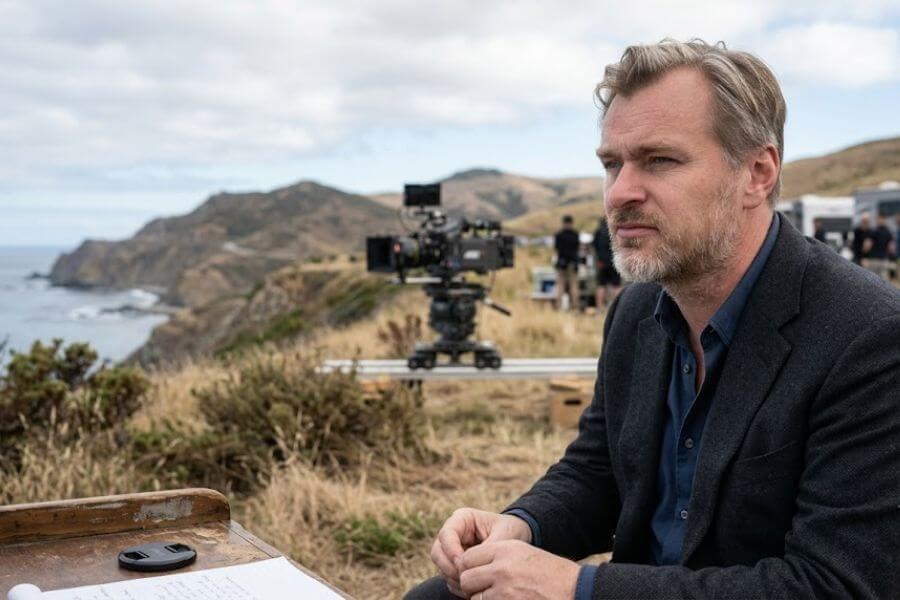
You have likely sat in a dark theater, holding your breath while a massive wall of sound washed over you and mind-bending visuals filled your eyes. This is the classic experience of watching a film directed by Christopher Nolan. For over two decades, this individual has changed how audiences around the world look at blockbusters. He has managed to bridge the gap between high-concept intellectual ideas and massive commercial appeal, a feat that very few directors in history have achieved.
When you look at his entire body of work, you are watching the steady rise of a visual master. He started with tiny budgets, shooting on weekends with his friends using leftover film stock. Today, he commands massive studio budgets that allow him to crash real airplanes, build giant spinning hallways, and recreate atomic explosions without using digital effects. His dedication to traditional cell film and the grand scale of the theater experience has turned him into a champion for the preservation of cinema itself.
To truly understand his legacy, you need to look closely at every single piece of his filmography. Each project is a stepping-stone that shows how he built his signature style. By ranking these films from the least successful experiments to his absolute masterpieces, you can trace the evolution of his themes. You will see his constant obsession with memory, the heavy weight of guilt, the endless struggle against time, and the deep sacrifices that human beings make for love or duty. Let us dive into this amazing film collection and see how each project stacks up against the rest.
13. Following (1998)
The First Low-Budget Step
Your journey through this film collection starts at the very beginning with a black-and-white crime thriller that runs for just seventy minutes. This project represents the raw, unpolished starting point of a young artist testing his boundaries. Shot entirely on handheld cameras over the course of many weekends, the story follows a lonely young writer who starts trailing strangers around the streets of London to find inspiration for his work. Soon, he gets pulled into a dark world of home burglaries and criminal manipulation when one of his targets catches him in the act.
Why It Sits At The Bottom
While this debut is highly impressive given its tiny budget, it naturally lacks the grand scale and polished execution of his later works. You can easily see the rough edges in the sound design and the limited acting range of the cast, who were mostly friends working for free. The narrative uses a chopped-up timeline to hide the simple nature of the plot, a technique that would become far more elegant in his future projects. It is a fascinating historical artifact for fans, showing the exact seeds of his style, but it cannot compete with the massive cinematic experiences that followed.
The Emerging Signature Themes
Even in this micro-budget project, you will spot the core elements that define his entire career. The main character wears a crisp suit, a visual choice that the director himself adopts in his daily life. The themes of obsession, the slippery nature of personal identity, and the danger of getting too close to a subject are all front and center. You are watching a director learn how to manipulate your expectations, using a non-linear structure to turn a basic robbery story into a complex puzzle.
12. Tenet (2020)
The Extreme Limits of Time Manipulation
Moving from his smallest film to one of his most massive, this project takes the concept of bending time to its absolute breaking point. The story drops you into a cold world of international espionage where agents do not just travel through time, they actually move backward through it using a technology called inversion. This means a bullet can fly back into a gun barrel, and an explosion can freeze water instead of burning it. You follow a nameless secret agent who must race across the globe to stop a bitter Russian villain from destroying the fabric of reality itself.
The Struggle Between Concept and Feeling
This project lands lower on the list because it prioritizes its mathematical time puzzle over emotional connection. You might find yourself scratching your head trying to follow the complex rules of physics rather than caring about the survival of the characters. The dialogue is often buried under a loud, pounding musical score, making the intricate plot explanations difficult to catch on a first viewing. It is a stunning visual achievement featuring jaw-dropping action scenes where cars crash forward and backward at the same time, but it often feels more like a cold science experiment than a heart-warming human story.
Highlights of Technical Mastery
Despite the narrative confusion, you cannot ignore the sheer brilliance of the action design. The production team avoided digital animation, choosing instead to film massive stunts twice, once with the stunt actors moving forward and once with them performing the actions completely in reverse. The grand sequence involving a real cargo plane crashing into an airport hangar shows a commitment to physical reality that will leave you breathless. It is a bold, uncompromising vision that shows what happens when a director receives total creative freedom to chase his wildest ideas.
11. Insomnia (2002)
A Rare Psychological Remake
This project stands out as a unique entry in his film career because it is the only time he directed a story that he did not write himself. A remake of a famous Norwegian thriller, the plot follows a brilliant but troubled detective from Los Angeles who travels up to a remote Alaskan town to investigate the brutal murder of a teenage girl. The town is stuck in the middle of its summer season, meaning the sun never sets, flooding the sky with twenty-four hours of blinding daylight. As the detective struggles to sleep, his mind begins to unravel, a situation made much worse when he accidentally shoots his own partner during a thick fog.
The Battle of Acting Heavyweights
The real joy of this project comes from watching two legendary actors face off in a psychological game of cat and mouse. Al Pacino plays the exhausted, guilt-ridden detective with a raw weariness that you can almost feel through the screen. Opposite him, Robin Williams steps completely out of his comedic comfort zone to play a cold, calculating killer who uses the detective’s dark secrets to blackmail him. Their quiet conversations over the phone and in tiny fishing cabins provide a gripping tension that relies entirely on psychological weight rather than loud explosions.
The Value of Directing for Hire
While this film is a straightforward studio thriller that follows a traditional path, it proved that the young director could handle massive Hollywood stars and major studio pressures. You can feel the heavy atmosphere of the small town, where the endless light acts as an interrogation lamp that slowly breaks down the main character’s sanity. It may lack the grand intellectual puzzles of his science-fiction epics, but it stands as a rock-solid, beautifully shot crime drama that highlights his ability to generate deep suspense from human weakness.
10. Batman Begins (2005)
Saving a Broken Franchise
When this project arrived in theaters, the superhero genre was in a very different place. Comic-book movies were often bright, campy, and focused on selling toys. This film completely changed that landscape by taking a grounded, hyper-realistic look at how a broken orphan could actually become a masked vigilante. You watch a long, detailed journey through the dark alleys of Gotham City and the frozen mountains of Asia, learning exactly where the character got his martial arts training, his armored suit, and his famous high-tech vehicle.
Building the Foundation of Realism
The genius of this approach was making you believe that this world could exist right outside your window. The city looks dirty, wet, and corrupted by institutional greed, turning it into a real character rather than a colorful comic-book backdrop. By casting top-tier dramatic actors like Christian Bale, Liam Neeson, and Michael Caine, the project treated the silly source material with the absolute seriousness of a high-stakes crime epic. It spent its entire first hour focused purely on character development and emotional trauma before the famous mask even appeared on screen.
The Birth of Modern Blockbuster Style
This film did more than just launch a successful trilogy; it set a brand-new blueprint for how Hollywood would handle old intellectual properties for the next two decades. The fast-paced editing, the heavy use of practical stunt cars, and the dark, psychological themes showed that mass entertainment could still be smart and artistically valid. While the action scenes can sometimes feel a bit messy and fast-cut compared to his later, more confident work, the story structure delivers a powerful, satisfying arc about conquering your own fears.
9. The Dark Knight Rises (2012)
The Massive Weight of a Grand Finale
Ending a world-famous trilogy is one of the hardest tasks in modern entertainment, especially when the previous chapter was praised as an absolute masterpiece. This massive conclusion attempts to tie up every single narrative thread by jumping eight years into the future. You find the main hero broken down, hiding away as a reclusive billionaire while his city enjoys a fragile peace. That peace is shattered when a muscular, masked terrorist named Bane takes over the city by force, trapping the population and cutting them off from the rest of the world.
Spectacular Scale and Structural Flaws
The sheer size of this project is astonishing to behold. You are treated to incredible stadium explosions, massive street battles featuring thousands of real extras, and a flying vehicle that maneuvers through tight city canyons. However, the plot struggles under its own immense weight. The timeline can feel sloppy, characters move across the world with impossible speed, and some of the late-stage twists feel forced. Yet, when the film hits its emotional peaks, like the hero escaping from a deep underground prison pit, it delivers a sense of operatic triumph that few other blockbusters can match.
A Satisfying Close to a Myth
What makes this entry rank ahead of the original origin story is its willingness to give a definitive ending to a legendary character. It explores the physical and mental toll of being a symbol, showing how a city can save itself when its citizens are inspired to stand up against tyranny. The villain, despite having his voice altered in a way that sometimes sounds strange, presents a terrifying physical threat that forces the hero to push past his physical limits. It is a grand, flawed, yet deeply moving farewell to a world that redefined modern cinema.
8. Dunkirk (2017)
A Survival Epic Stripped of Excess
With this project, the director turned his eye toward real history, crafting a World War II survival story that strips away almost all traditional movie tropes. There are no long speeches about politics, no scenes showing worried generals back in safe offices, and barely any character backstory. Instead, you are dropped directly onto a beach where four hundred thousand Allied soldiers are trapped by the enemy, with their backs to the freezing sea. The entire film operates as a giant, ticking clock where the only goal is to find a way to survive the next ten minutes.
The Three-Pronged Time Puzzle
Even when telling a straightforward historical event, the filmmaker could not resist playing with the structure of time. The narrative splits into three distinct viewpoints that occur over three completely different timescales:
- The Mole: You spend one full week with the desperate soldiers on the beach trying to board evacuation ships.
- The Sea: You spend one single day with an older civilian man sailing his small wooden boat across the dangerous channel to rescue troops.
- The Air: You spend one single hour inside the tight cockpit of a fighter plane as a pilot hunts down enemy bombers.
The brilliance of the editing is how these three tracks weave together, colliding at the exact same emotional climax.
Pure Visual and Auditory Cinema
This project is a masterclass in telling a story through pure action and sound. The ticking of a real pocket watch is woven directly into the musical score, creating a constant state of panic that never lets up. The camera mounts directly onto the wings of real vintage airplanes, giving you the terrifying, claustrophobic sensation of engaging in a dogfight over the ocean. By using real naval destroyers and thousands of actual people on the sand, the film rejects digital artificiality to create an overwhelming sensory experience that honors the true scale of the historical event.
7. The Prestige (2006)
A Dark Tale of Tragic Obsession
Tucked neatly between his massive superhero movies lies a smaller, deeply twisted psychological thriller about two rival stage magicians in Victorian London. The plot tracks their escalating war of sabotage and revenge as they both try to create the ultimate illusion: a trick where a man appears to instantly travel from one side of the stage to the other. Their obsession with outdoing one another destroys their relationships, their sanity, and their lives, leading down a dark path that mixes stage magic with early science-fiction technology.
The Ultimate Cinematic Magic Trick
The true genius of this project is that the structure of the film itself mimics the classic three-step structure of a stage magic trick. The opening narration explains these steps directly to you:
- The Pledge: You are shown something ordinary, like a deck of cards or a bird.
- The Turn: The magician takes the ordinary thing and makes it do something extraordinary, like disappear.
- The Prestige: You look for the secret, but you cannot find it because you want to be fooled, leading to the grand reveal.
The script uses misdirection, double identities, and unreliable journals to hide its secrets right in front of your eyes. When you watch it a second time, you will realize that every single twist was explicitly revealed in the opening minutes, but you were simply looking at the wrong spot.
A Mirror For The Director Himself
It is hard not to look at this project as a personal confession from the filmmaker about his own relationship with his craft. Like the obsessed magicians on screen, a film director is someone who constructs elaborate illusions to fool an audience, sacrificing massive amounts of personal time and energy to achieve a few moments of wonder. With standout performances from Hugh Jackman and Christian Bale, alongside a brilliant appearance by David Bowie as the eccentric inventor Nikola Tesla, this remains one of his most tightly written, rewatchable, and satisfying mysteries.
6. Memento (2000)
The Brilliant Breakdown of Memory
This is the breakthrough project that put the young director on the global map, and it remains a masterclass in creative screenplay writing. The story follows an insurance investigator who is desperately hunting for the man who attacked him and murdered his wife. However, there is a massive catch: the investigator suffered a severe head injury that left him with a rare form of short-term memory loss. He cannot form any new memories, meaning his mind wipes clean every few minutes, forcing him to use a complex system of instant photos, paper notes, and tattoos on his own skin to keep track of his investigation.
Moving Backward to Feel the Confusion
To make you truly understand what it feels like to live with this terrifying condition, the director structures the entire narrative backward. Every time a new scene begins, you have absolutely no idea where the character is, how he got there, or who he is talking to, which is the exact mental state of the protagonist. A scene might start with him running through a parking lot, and it takes several moments for him to realize whether he is chasing someone or being chased. This structure turns you into an active participant in the puzzle, forcing you to piece together the truth from a collection of broken fragments.
A Cold Look at Self-Deception
What elevates this film from a clever gimmick to a true masterpiece is its dark psychological conclusion. It challenges the very idea of truth, showing how human beings can manipulate their own memories to escape from their guilt and pain. The low-budget aesthetic works perfectly here, creating a gritty, sun-bleached world where everyone is trying to take advantage of a man who cannot remember what happened five minutes ago. It is a thrilling, disturbing ride that announced the arrival of a major narrative innovator.
5. Interstellar (2014)
A Massive Space Voyage Rooted in a Father’s Love
This ambitious science-fiction epic takes you from the dusty cornfields of a dying Earth to the furthest reaches of a distant galaxy. With the planet running out of food due to a worldwide blight, a former pilot is recruited by a secret space agency to travel through a mysterious wormhole near Saturn. His mission is to explore three potential new planets that could house human life. The catch is that due to the extreme gravitational forces of a nearby black hole, time moves much slower for the travelers than for the people left behind, meaning every hour spent on a planet costs decades of life back home.
Visualizing the Invisible
The visual achievements of this project are staggering. The production team worked alongside leading theoretical physicists to write entirely new software programs that could accurately simulate the appearance of a black hole based on real mathematical equations. The resulting image of a glowing ring of light bent around a dark sphere of gravity was so accurate that it actually led to new scientific discoveries. From frozen cloud structures to massive ocean waves that reach into the sky, the film presents space not as a green-screen background, but as a vast, terrifying, and beautiful reality.
The Emotional Core That Saves the Journey
What keeps this massive technical project from drifting off into cold space is its powerful emotional core. At its heart, the entire story is about a father trying to keep a promise to return to his young daughter. The scenes where the pilot watches decades of video messages from his children growing up in a matter of minutes are deeply moving, providing some of the most heartbreaking acting of Matthew McConaughey’s career. It is a film that dares to argue that love is a measurable force that can transcend the boundaries of dimensions and time, making it his most emotional and human achievement.
4. Inception (2010)
Stealing Secrets Inside Your Mind
Imagine a world where corporate spies do not break into secure office buildings, but instead slip directly into your mind while you are asleep to steal your most valuable ideas. This project introduces you to a professional thief who specializes in this dangerous art. He is offered a final, impossible job that could win his freedom back: instead of stealing an idea, he must perform the opposite act, known as planting an idea so deeply into a target’s mind that they believe they thought of it themselves. To do this, he must construct an elaborate series of dreams within dreams, descending multiple levels into the target’s subconscious mind.
Setting The Rules of Modern Action
This film stands as a monumental achievement in action cinema because it creates a whole new set of rules for physical movement. As the dream levels descend, the physics of the upper levels affect the world below:
- Level One: A van chases through a rain-soaked city.
- Level Two: The van rolls down an embankment, causing gravity to completely disappear in a hotel hallway below, leading to a stunning fight scene where characters bounce off walls and ceilings.
- Level Two Visuals: A spinning room built on a giant axis allows actors to perform stunts with no ropes or digital assistance.
- Level Three: A snow fortress assault happens simultaneously, with all tracks moving at different speeds due to time expansion.
The Lingering Mystery of Reality
The true mark of this project’s cultural impact is how its final frame is still debated in modern popular culture. By using a small spinning metal top as a tool to determine whether the main character is in reality or a dream, the director sets up a final moment that cuts to black at the exact instant the top begins to wobble. It forces you to question whether the ending matters as long as the character is happy, leaving an unforgettable impression that shows how commercial action cinema can still leave an audience thinking for weeks.
3. The Odyssey (2026)
A Masterful Modern Take on an Ancient Epic
Taking on Homer’s foundational Greek myth is a massive challenge for any director, but this latest masterpiece fits perfectly into a career spent exploring long journeys and homecomings. The story follows a legendary warrior king trying to return to his island kingdom after a brutal ten-year war. His journey home takes another ten years as he faces mythical monsters, wrathful gods, and magical traps that test his wits and his loyalty. Shot entirely across the globe on the newest 70mm camera systems, the project transforms an ancient poem into a sprawling, modern cinematic epic.
The Ultimate Transformation of Myth into Reality
What makes this adaptation rank so high is how it handles the magical elements of the original text. Instead of relying on digital creature designs, the production constructed massive physical creations to represent the monsters. The cyclops is handled through brilliant camera angles and massive animatronic structures that give the creature a terrifying weight and presence. The sirens are presented as a haunting auditory phenomenon that messes with the inner ear of the sailors, causing them to hallucinate. It is an amazing blend of ancient mythology and grounded realism that makes the ancient world feel immediate and dangerous to you.
A Career-Defining Exploration of Time and Home
This project feels like the ultimate summary of everything the director has been building toward throughout his entire life. The theme of a man desperate to return home to his wife and child mirrors the emotional drive of his earlier space and dream epics. The decade-long journey is edited in a way that makes you feel the long weight of time, contrasting the frantic action of the sea battles with quiet, agonizing years of isolation. Backed by a spectacular international cast and a booming, primitive musical track, this film stands as a triumphant milestone that shows an artist operating at the absolute peak of his creative powers.
2. Oppenheimer (2023)
The Biography Formed as a Thriller
Taking a historical biography about a theoretical physicist and turning it into a three-hour box-office sensation is something almost no other modern filmmaker could pull off. The project charts the life of the brilliant scientist who led the secret laboratory that built the first atomic bomb during World War II. Instead of a dry history lesson, the narrative is built like a tense courtroom thriller, weaving between the secret race to build the weapon and the dark political betrayal that the scientist faced during government hearings years later.
A Contrast of Color and Mind
The film uses a brilliant visual structure to separate different viewpoints of the historical events:
- Fission: These sequences are shot in rich color, representing the personal, emotional experience of the main scientist as he looks at the world through the lens of quantum physics.
- Fusion: These sequences are shot in stark black-and-white, representing a cold, objective look at the political moves of a rival government official who is working to destroy the scientist’s reputation.
The film regularly breaks away to show abstract visuals of spinning sparks, waves of light, and cosmic explosions, letting you peek inside a brilliant mind that is constantly visualizing the hidden forces of the universe.
The Horrific Silence of Success
The undisputed peak of this project is the recreation of the first atomic test in the New Mexico desert. Instead of relying on digital effects, the crew mixed chemicals, explosives, and magnesium flares to create a massive wall of fire that mimics the scale of the real blast. When the bomb goes off, the director makes the brilliant choice to cut out all sound entirely, leaving you in a state of absolute silence as you watch the terrifying beauty of the fire cloud grow. Only after a long, agonizing pause does the massive sound wave finally hit the theater, shaking your seat and standing as an unforgettable warning about the dangerous powers that humanity has unleashed upon itself.
1. The Dark Knight (2008)
The Undisputed Peak of Modern Cinema
This is the definitive masterpiece that stands above the rest of this impressive film collection, a project that transcended its comic-book roots to become one of the greatest crime epics in the history of American movies. The plot takes a deep, uncompromising look at a city falling into chaos when a brilliant, theatrical anarchist arrives to tear down the established order. It abandons all traditional superhero conventions to become a gritty, realistic crime saga influenced by classic Hollywood police dramas, capturing a specific cultural anxiety about safety, terrorism, and the limits of morality.
An Unforgettable Performance for the Ages
You cannot talk about this film without highlighting the legendary performance of Heath Ledger as the chaotic villain. He completely disappears into the role, creating a terrifying figure who moves with a strange nervous energy, licks his lips constantly, and speaks in a shifting voice that goes from a high pitch to a deep growl. This villain is not interested in money or world domination; he simply wants to prove to the world that underneath their polite surface, human beings are just as corrupted and cruel as he is. Every single scene featuring his presence crackles with a dangerous energy where anything could happen.
Perfect Structure and Visual Power
From its stunning opening bank robbery scene, which was filmed using massive high-resolution cameras, the project never stops building tension. The narrative presents a series of impossible moral choices that force the heroes to question how far they are willing to go to stop a monster without becoming monsters themselves. The practical stunt work, including flipping a real eighteen-wheel semi-truck upside down in the middle of a major city street, provides a physical weight that digital movies simply cannot replicate. It is a flawless blend of popular entertainment and high-stakes artistic expression that remains the absolute best film of this director’s extraordinary career.
Summary of Film Collection
To help you get a clear look at how this incredible film collection shapes up across different styles, budgets, and key themes, here is a quick overview of every project. This breakdown highlights the progression from small indie projects to massive global blockbusters.
- Following (1998): Made with a tiny budget. Features independent actors. Focuses on short-term crimes and non-linear timelines. Sits at the bottom of the list due to rough audio.
- Tenet (2020): Made with a massive studio budget. Features global action stars. Focuses on reverse time physics and international spies. Confusing narrative choices hold it back.
- Insomnia (2002): Made with a medium studio budget. Features classic Hollywood actors. Focuses on psychological guilt and a relentless environment. Standout acting carries a simple plot.
- Batman Begins (2005): Made with a large studio budget. Launch of a famous trilogy. Focuses on realism, overcoming fear, and building symbols. Revived a dead franchise.
- The Dark Knight Rises (2012): Made with a massive studio budget. Grand conclusion to a trilogy. Focuses on physical pain, societal collapse, and definitive endings. Operatic but messy in its plotting.
- Dunkirk (2017): Made with a large historical budget. Features an ensemble cast. Focuses on real history, survival, and multiple overlapping timelines. Tells a story through pure sound and sight.
- The Prestige (2006): Made with a medium budget. Features top-tier dramatic actors. Focuses on intense rivalry, stage magic, and devastating sacrifices. Structured exactly like a magic trick.
- Memento (2000): Made with a small indie budget. Features independent dramatic actors. Focuses on short-term memory loss and backward storytelling. A brilliant puzzle that launched a career.
- Interstellar (2014): Made with a massive space budget. Features award-winning stars. Focuses on space travel, black holes, and the bond between father and daughter. Deeply emotional.
- Inception (2010): Made with a large creative budget. Features a global ensemble. Focuses on dream theft, layered realities, and subconscious guilt. Redefined modern action physics.
- The Odyssey (2026): Made with an epic fantasy budget. Features massive modern stars. Focuses on ancient mythology, survival, and returning home. A triumphant visual adaptation of a classic poem.
- Oppenheimer (2023): Made with a massive historical budget. Features a stellar dramatic cast. Focuses on the atomic bomb, scientific guilt, and political hearings. A three-hour biographical thriller.
- The Dark Knight (2008): Made with a large studio budget. The peak of the trilogy. Focuses on absolute chaos, moral corruption, and systemic decay. The definitive modern crime masterpiece.
Comparison of Major Themes
When you compare these projects across different eras, you notice that the director returns to the same intellectual ideas over and over again. This table shows how his core themes manifest across his different types of films.
| Film Type | Treatment of Time | Nature of the Villain | Main Character Drive |
| Early Indie Projects | Split into broken fragments to puzzle the audience. | Petty criminals or manipulative associates who exploit weakness. | Driven by simple curiosity, obsession, or a need to escape personal pain. |
| Superhero Epics | Straightforward but fast-paced, covering many years of growth. | Ideological extremists who want to tear down social structures. | Driven by a sense of duty, trauma, and a desire to protect an entire city. |
| Science Fiction | Stretched, bent, or layered across multiple dimensions. | The cold laws of physics, space environments, or human betrayal. | Driven by survival, the continuation of humanity, and family connections. |
| Historical Biographies | Weaved between past achievements and future consequences. | Corrupted political systems, institutional greed, or personal guilt. | Driven by scientific discovery, historical necessity, or a long journey home. |
Frequently Asked Questions
Why does this director avoid using digital effects and green screens?
You will find that he avoids digital animation because he believes that the human eye can always spot the difference between an artificial image and reality. By building real sets, crashing actual vehicles, and using physical camera tricks, he forces the actors to react to real things in front of them. This technique anchors the fantasy worlds in a tangible reality, which makes the stakes feel far higher and more thrilling to you as an audience member.
What is the significance of the non-linear timelines in these stories?
The use of mixed timelines is not just a gimmick to confuse you; it is a deliberate choice to align your mental state with the characters on screen. In a memory mystery, the backward timeline makes you feel as lost as the protagonist. In a survival story, the overlapping timelines heighten the tension, showing how different events happening at different speeds can collide at one big emotional peak. It turns moviegoing into an active puzzle-solving experience.
Why is the audio design and music often so loud in his films?
The booming audio tracks and loud sound mixes are designed to create a physical sensation inside the theater. The filmmaker treats sound as an independent force that can generate panic, excitement, or deep sadness. By weaving physical sounds like a ticking clock or a roaring engine into the musical score, the audio works directly on your nervous system, pulling you out of your safe seat and dropping you into the dangerous environment of the screen.
How has his style changed from his early works to his latest project in 2026?
If you watch his career unfold, you can see a clear path from small, clever puzzles to grand emotional epics. His early independent films were focused purely on narrative tricks and cold mysteries. As he gained access to larger budgets, he began to marry his complex time structures with massive physical scale and deep human emotions. His latest projects show an artist who has mastered both technical blockbusters and profound historical dramas, making him a true modern master of the medium.