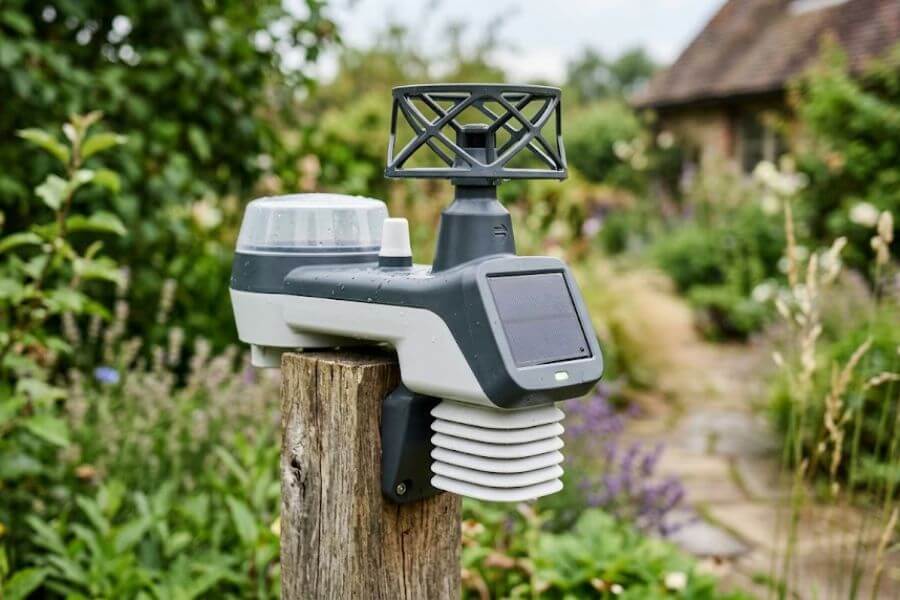
Keeping an eye on the weather is about more than just knowing whether to grab an umbrella before walking out the door. With modern smart home technology, you can track real-time climate conditions right from your backyard. The latest generation of home weather stations combines high-tech sensors with powerful mobile apps and smart predictive AI. These devices don’t just tell you the current temperature; they learn from surrounding weather patterns and offer hyper-local forecasts tailored specifically to your exact coordinates. Whether you want to protect your garden from an unexpected frost or optimize your smart thermostat, these devices offer incredible precision. Let’s look at the smartest options available today to help you find the perfect match for your home.
Quick Summary Table
| Rank | Weather Station Model | Key Strength | Best Suited For |
| 1 | Tempest Weather System | Advanced Predictive AI | Complete Smart Home Integration |
| 2 | Ambient Weather WS-2902C | High Accuracy Display | Enthusiasts Who Want a Dedicated Screen |
| 3 | Netatmo Smart Weather Station | Sleek Modular Design | Indoor and Outdoor Monitoring |
| 4 | Davis Instruments Vantage Vue | Rugged Durability | Long-Term Reliability and Precision |
| 5 | Ecowitt Wittboy GW2001 | Ultrasonic Sensor Tech | Low-Maintenance Lovers |
| 6 | Logia 7-in-1 Wireless Station | Budget-Friendly Data | Homeowners Wanting All-in-One Value |
| 7 | Sainlogic WiFi Weather Station | Easy Visual Reading | Quick Overhead Monitoring |
| 8 | AcuRite Iris 5-in-1 (01544M) | Simple User Interface | Beginners and Casual Users |
How We Ranked These
To find the absolute best options on the market, we evaluated dozens of models based on real-world usability and technical features. We focused heavily on how well these devices blend into a modern smart home ecosystem while keeping things simple enough for everyday users. Here are the key factors we used to determine our rankings:
- Predictive AI and Forecasting: We looked at how well the companion apps use artificial intelligence and machine learning to refine local forecasts over time.
- App Experience and Tracking: A weather station is only as good as its software, so we rated apps based on layout, historical data graphing, and remote monitoring capabilities.
- Sensor Accuracy and Range: We checked how precisely the units measure wind speed, rainfall, humidity, barometric pressure, and temperature.
- Smart Home Compatibility: We prioritized systems that easily connect with popular platforms like Amazon Alexa, Google Assistant, and IFTTT to trigger automated routines.
- Durability and Maintenance: We favored stations built with high-quality materials that resist extreme sun, heavy rain, and freezing winters without needing constant cleaning.
1. Tempest Weather System
The Tempest Weather System takes the top spot because it completely ditches moving parts in favor of revolutionary ultrasonic and haptic sensors. This means you do not have to worry about mechanical wind cups breaking or rain gauges getting clogged with autumn leaves. Its standalone app is a masterpiece of design, utilizing powerful proprietary machine learning algorithms that cross-reference your backyard data with regional meteorological models to constantly improve your local forecast. It integrates beautifully with smart irrigation controllers and home automation hubs, making it the smartest choice for a truly connected home.
2. Ambient Weather WS-2902C
If you love having a dedicated visual hub inside your house alongside a powerful phone app, the Ambient Weather WS-2902C is an exceptional choice. This station tracks everything from solar radiation and UV index to wind speed and rainfall, transmitting data to a crisp, brightly lit color console. The Ambient Weather Network app allows you to join a massive community of amateur meteorologists, where you can share your data and view smart, predictive graphs that map out upcoming shifts in your microclimate. It handles smart home triggers perfectly, allowing you to tell your smart blinds to close automatically when the solar radiation hits a specific threshold.
3. Netatmo Smart Weather Station
The Netatmo Smart Weather Station stands out with its gorgeous, minimalist aluminum tubes that look like high-end decor rather than clunky weather equipment. This modular system splits into an indoor and an outdoor component, giving you deep insights into your home’s air quality, noise levels, and humidity alongside traditional outdoor metrics. Its highly intuitive app sends sleek push notifications directly to your phone or smartwatch, using integrated predictive logic to warn you when it is time to air out your living room or prepare for incoming rainfall. It is an ideal pick for urban dwellers and design-conscious homeowners who want smart tracking without an industrial look.
4. Davis Instruments Vantage Vue
For those who prioritize industrial-grade accuracy and legendary durability above all else, the Davis Instruments Vantage Vue is a powerhouse option. Long trusted by professional storm chasers and farmers, this station updates its data every 2.5 seconds, giving you unmatched real-time precision during severe weather events. While it retains a classic professional feel, its connection to the WeatherLink cloud app brings it firmly into the modern era with AI-assisted data analysis and extensive charting tools. It is built like a tank, ensuring that your tracking continues uninterrupted through the harshest blizzards and intense heatwaves.
5. Ecowitt Wittboy GW2001
The Ecowitt Wittboy GW2001 is a futuristic device featuring an integrated anti-bird design and a solid-state haptic rain sensor that detects the vibration of individual raindrops. This clever construction means you will spend zero time climbing ladders to clean out debris or animal nesting materials from your outdoor unit. The accompanying Ecowitt app provides a clean, web-accessible dashboard packed with customization options, allowing you to calibrate sensors and feed data into predictive open-source weather networks. It is a fantastic option for tech enthusiasts who want deep data customization and low-maintenance hardware.
6. Logia 7-in-1 Wireless Station
The Logia 7-in-1 Wireless Station offers an incredible amount of data tracking for its price point, making it a stellar value-packed contender. This unit measures temperature, humidity, wind speed, wind direction, rainfall, UV index, and solar radiation all within a single, cohesive outdoor sensor array. The system connects easily to your home Wi-Fi network, syncing your backyard readings directly to global weather platforms where you can view automated, predictive trends via your favorite mobile apps. It gives you all the essential tracking metrics you need to manage your garden and daily outfits without breaking the bank.
7. Sainlogic WiFi Weather Station
The Sainlogic WiFi Weather Station focuses heavily on ease of use and instant visual clarity for your daily routine. Its large, bright base station displays all your local ambient data at a glance, using color-coded sections so you can check wind conditions or barometric trends from across the room. By linking the device to open weather applications, you unlock remote tracking on your smartphone, enabling smart forecast models that adapt to your specific elevation and location. It is a highly dependable tool for families who want a reliable, straightforward window into the elements.
8. AcuRite Iris 5-in-1 (01544M)
The AcuRite Iris 5-in-1 is an excellent introductory station designed for casual weather watchers who want accurate data without a steep learning curve. The outdoor sensor installation is incredibly straightforward, and the high-contrast indoor display provides easy-to-read icons for current conditions and simple trends. When paired with the My AcuRite app, the system uses a unique learning mode that monitors changes in your barometric pressure over several weeks to generate a highly personalized 12-hour forecast. It is a friendly, accessible device that perfectly introduces smart weather tracking to beginners.
Conclusion
Investing in a smart home weather station takes the guesswork out of planning your day and managing your property. By choosing a system equipped with app tracking and predictive AI, you gain an intimate understanding of your immediate environment that generalized news reports simply cannot match. From self-cleaning sonic sensors to beautiful indoor display consoles, there is a perfect option available for every budget and technical skill level. Evaluate your specific smart home goals, pick the unit that matches your style, and enjoy the confidence of having your very own personal meteorologist right in your backyard.
Frequently Asked Questions
Do smart home weather stations require a monthly subscription fee to use the app?
Most consumer smart weather stations provide full access to their mobile apps, historical data graphs, and basic predictive AI features completely for free. Manufacturers build the software costs directly into the price of the hardware. However, a few premium brands might offer optional paid subscription tiers if you want advanced commercial-grade data storage, API access for custom coding projects, or rapid high-frequency data refreshing beyond the standard rates.
Can these weather stations continue to track data if my home internet goes down?
If your home Wi-Fi drops, most smart stations will temporarily stop sending real-time updates to your smartphone app. However, many models feature built-in internal memory or base consoles that store several days’ worth of data locally. Once your internet connection is safely restored, the station will automatically upload the cached information to the cloud app, ensuring you do not suffer any permanent gaps in your long-term weather history.
Where is the best place to install the outdoor sensor array for accurate readings?
To get the most accurate results, you should mount your outdoor sensor unit in an open area at least four times the distance of the height of the tallest nearby obstruction, like trees or your roofline. For ideal wind and temperature tracking, place the unit roughly six to ten feet off the ground, away from direct heat sources like concrete patios, black asphalt driveways, or metal sheds, which can artificially inflate the temperature readings.
How do these systems use AI to predict the weather if they are only in one yard?
While your station collects highly localized data from your specific yard, the companion app does not work in total isolation. The predictive AI engines combine your real-time local metrics, such as sudden drops in barometric pressure or shifts in wind direction, with massive regional radar models and regional satellite data. By blending your hyper-local ground truth with larger atmospheric data, the artificial intelligence can calculate an incredibly precise forecast for your exact neighborhood.
How long do the batteries typically last in the outdoor sensor units?
Most outdoor sensor arrays are designed with extreme efficiency in mind, typically yielding a battery life of one to two years. Many top-tier models feature small integrated solar panels that power the device during daylight hours and use regular lithium batteries purely as a backup for nighttime or heavily overcast days. Using high-quality lithium batteries instead of alkaline ones ensures the station performs reliably through severe sub-zero winter temperatures.