Not every product launch becomes a success story. Some products change industries and create billions in revenue, while others become expensive lessons that companies would rather forget. Even some of the world’s biggest brands have launched products that failed spectacularly despite huge budgets, extensive marketing campaigns, and strong brand recognition.
When a product fails, the damage often goes beyond lost sales. Companies can suffer from damaged reputations, wasted research and development costs, inventory losses, and declining customer trust. In some cases, a single failed product can affect a company’s financial performance for years.
In this article, you will discover ten of the biggest product failures in business history, why they failed, and the valuable lessons brands can learn to avoid making similar mistakes.
Quick Summary Table 📊
| Product | Brand | Launch Year | Main Reason for Failure | Estimated Impact |
|---|---|---|---|---|
| New Coke | Coca-Cola | 1985 | Changed a beloved formula | Millions in losses |
| Fire Phone | Amazon | 2014 | Weak value proposition | Over $170 million write-down |
| Segway PT | Segway | 2001 | Overhyped expectations | Hundreds of millions lost |
| Google Glass | 2013 | Privacy concerns and high price | Major commercial failure | |
| Crystal Pepsi | PepsiCo | 1992 | Confusing positioning | Millions in lost investment |
| Microsoft Zune | Microsoft | 2006 | Strong competition from iPod | Significant financial losses |
| Juicero | Juicero | 2016 | Overpriced and unnecessary | Over $100 million invested |
| Samsung Galaxy Note 7 | Samsung | 2016 | Battery safety issues | Billions in recall costs |
| Ford Edsel | Ford | 1958 | Poor market research | Massive financial losses |
| Quibi | Quibi | 2020 | Weak consumer demand | Nearly $2 billion lost |
How We Ranked These Product Failures 🎯
We ranked these failures using several important factors:
- Financial losses suffered by the company
- Impact on brand reputation
- Level of public attention and media coverage
- Expectations before launch
- Speed of product decline
- Long-term business consequences
- Number of customers affected
- Historical significance of the failure
1. New Coke by Coca-Cola 🥤
When people think about famous product failures, New Coke often comes to mind first.
In 1985, Coca-Cola decided to change its classic formula after conducting taste tests that suggested consumers preferred a sweeter flavour. The company believed the new formula would help it compete more effectively against Pepsi.
The problem was not the taste itself. The problem was that customers had an emotional connection to the original Coca-Cola recipe.
Consumers reacted with anger. Thousands of complaints flooded the company. Some customers even started stockpiling original Coca-Cola products.
Within months, Coca-Cola brought back the original formula under the name Coca-Cola Classic.
Key Lesson
Never underestimate the emotional attachment customers have to iconic products.
2. Amazon Fire Phone 📱
Amazon has enjoyed enormous success with products such as Kindle and Echo. However, the Fire Phone became one of its biggest failures.
Released in 2014, the smartphone entered a market already dominated by Apple and Samsung. Amazon attempted to differentiate the device with unique 3D visual effects and shopping-focused features.
Unfortunately, consumers saw little reason to switch from established smartphone brands.
The phone’s high price made matters worse, especially when compared with better-known alternatives.
Within a year, Amazon recorded a write-down of more than $170 million related to unsold inventory and commitments.
Key Lesson
A product must solve a meaningful customer problem, not simply offer unusual features.
3. Segway PT 🛴
Before its launch, many people believed the Segway Personal Transporter would revolutionise urban transportation.
Inventor Dean Kamen and many industry experts predicted the device would transform cities and replace traditional commuting methods.
The reality was very different.
The Segway was expensive, bulky, and difficult to fit into existing transport systems. Many cities lacked infrastructure to support its widespread use.
Although the product gained attention among tourists and security personnel, it never achieved mainstream adoption.
Key Lesson
Even innovative technology can fail if it does not fit naturally into everyday life.
4. Google Glass 👓
Google Glass generated enormous excitement when it was introduced.
The wearable device allowed users to access information, take photos, and interact with digital content through smart glasses.
While the technology was impressive, consumers quickly raised concerns about privacy. Many people felt uncomfortable around users who could potentially record videos without obvious signs.
The product also carried a premium price tag that limited adoption.
Although Google later shifted the technology towards business applications, the original consumer launch failed to meet expectations.
Key Lesson
Technological innovation must be balanced with social acceptance and practical value.
5. Crystal Pepsi 💎
In the early 1990s, Pepsi launched Crystal Pepsi, a clear cola designed to appeal to consumers interested in purity and healthier lifestyles.
The product generated strong initial curiosity and sales.
However, customers soon became confused. The drink looked like water or lemon-lime soda but tasted like cola.
This mismatch between appearance and flavour created uncertainty in consumers’ minds.
Sales quickly declined, and Pepsi eventually discontinued the product.
Key Lesson
A product’s appearance and positioning should align with customer expectations.
6. Microsoft Zune 🎵
Microsoft launched the Zune in an attempt to challenge Apple’s hugely successful iPod.
The company invested heavily in development and marketing. The device offered several useful features and received generally positive reviews.
Unfortunately, it entered the market too late.
Apple had already built a strong ecosystem around the iPod and iTunes. Customers had little incentive to switch.
Despite several product updates, Zune never gained significant market share.
Microsoft eventually discontinued the product line.
Key Lesson
Being late to a market dominated by a strong competitor can be extremely difficult to overcome.
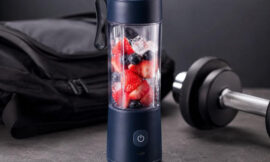
7. Juicero 🍊
Juicero became famous for all the wrong reasons.
The company created a high-tech juicing machine priced at several hundred pounds. Investors poured more than $100 million into the business.
The machine used specially designed juice packs that consumers inserted into the device.
Then journalists discovered something shocking.
The juice packs could be squeezed by hand with results similar to the expensive machine.
The revelation triggered widespread criticism and ridicule.
The company shut down shortly afterwards.
Key Lesson
Do not overengineer a simple solution that customers can easily accomplish themselves.
8. Samsung Galaxy Note 7 🔥
The Galaxy Note 7 was expected to be one of Samsung’s biggest smartphone successes.
Instead, it became a major crisis.
Soon after launch, reports emerged of batteries overheating and catching fire. Several incidents occurred on planes, in homes, and in public places.
Samsung initially issued replacement devices, but replacement units experienced similar problems.
The company eventually recalled the product entirely.
The recall cost billions and temporarily damaged Samsung’s reputation.
Key Lesson
Product safety and quality control should never be compromised in pursuit of faster launches.
9. Ford Edsel 🚗
The Ford Edsel is often considered one of the most famous automotive failures ever.
Ford invested heavily in research, development, manufacturing, and marketing before introducing the vehicle in 1958.
Expectations were incredibly high.
Unfortunately, the car arrived during changing economic conditions. Customers found the design unattractive, and the marketing campaign created unrealistic expectations.
Sales fell far below projections.
Ford eventually discontinued the brand after losing hundreds of millions of dollars when adjusted for inflation.
Key Lesson
Even extensive marketing cannot save a product that misses customer needs.
10. Quibi 🎬
Quibi launched in 2020 with a simple idea: short-form premium video content designed specifically for mobile devices.
The company attracted major investors, Hollywood talent, and significant media attention.
Despite these advantages, consumers showed little interest.
Many people already had access to free content through platforms such as YouTube, TikTok, and social media.
The timing also worked against Quibi as pandemic restrictions reduced commuting, one of the situations the service was designed for.
Within months, the company announced its shutdown.
Nearly $2 billion had been invested.
Key Lesson
Understanding real consumer behaviour is more important than building a business around assumptions.
Conclusion 🏆
The biggest product failures in history share several common themes. Many companies misunderstood customer needs, ignored market realities, overestimated demand, or focused too heavily on technology rather than practical value.
These examples show that even the world’s most successful brands can make costly mistakes. Strong brand recognition, large budgets, and talented teams do not guarantee success.
If there is one lesson that stands out above all others, it is that customers ultimately decide whether a product succeeds or fails. Brands that listen carefully to their audience and solve genuine problems are far more likely to achieve long-term success.
Frequently Asked Questions ❓
Can a failed product ever become successful later?
Yes. Some products fail initially because they enter the market too early. If technology improves or consumer preferences change, a revised version can eventually succeed.
What is the most expensive product failure in history?
Several products compete for that title, but Quibi, the Samsung Galaxy Note 7, and the Ford Edsel are often mentioned among the most financially damaging failures due to their enormous losses.
Why do large companies still release failed products?
Even large companies cannot perfectly predict customer behaviour. Market research reduces risk but cannot eliminate uncertainty completely.
How can businesses reduce the risk of product failure?
Businesses can reduce risk through customer testing, market research, quality control, pilot launches, and continuous feedback throughout development.
Are product failures always bad for a company?
Not necessarily. Some failures provide valuable lessons that help companies develop future successful products. Many innovative businesses view failure as part of the learning process.