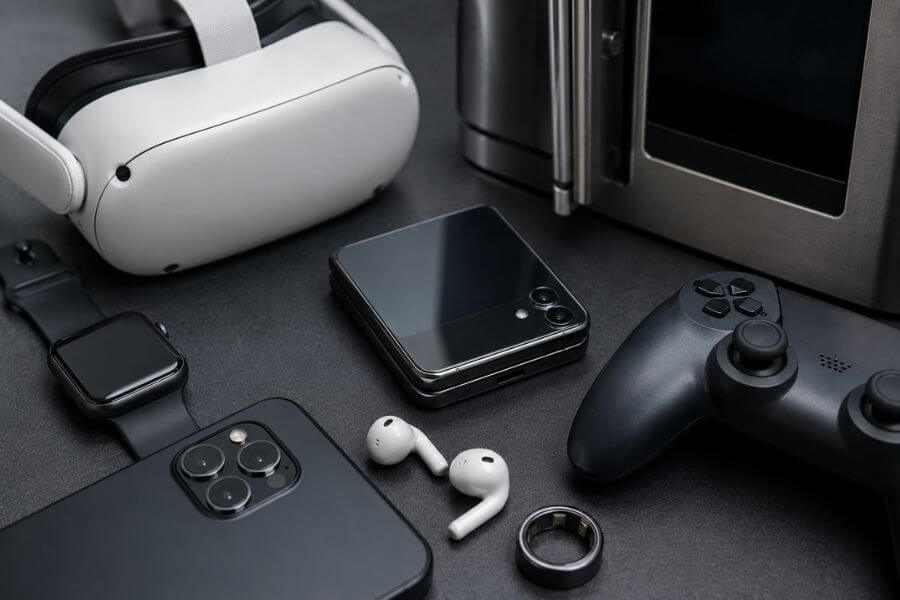
Technology companies release new gadgets every year, promising to make your life easier, faster, and more enjoyable. While some products genuinely deliver value, others receive huge amounts of attention without offering enough benefits to justify their price tags.
If you love technology, it can be tempting to buy the latest device simply because everyone is talking about it. However, not every trending gadget deserves a place in your home or office. Some products solve problems that most people do not have, while others offer only minor improvements over much cheaper alternatives.
In this guide, you’ll discover 10 of the most overrated tech products you should think twice about buying this year. This does not mean these products are completely useless. Instead, it means many buyers may not get enough value from them to justify the cost.
Quick Summary Table 📊
| Product Category | Why It’s Overrated | Better Alternative |
|---|---|---|
| Ultra-Premium Smartphones | Small upgrades for huge prices | Last year’s flagship phone |
| Luxury Smartwatches | Expensive features few people use | Mid-range smartwatch |
| Smart Refrigerators | High cost with limited benefits | Standard refrigerator |
| VR Headsets for Casual Users | Limited everyday use | Gaming console or tablet |
| Foldable Phones | Durability concerns and high prices | Traditional flagship phone |
| AI-Powered Personal Assistants | Often overpromise capabilities | Smartphone assistants |
| High-End Gaming Chairs | Marketing over comfort | Quality ergonomic office chair |
| Smart Mirrors | Limited practical value | Tablet or smart display |
| Premium Wireless Earbuds Above $300 | Diminishing returns | Mid-range earbuds |
| Smart Rings With Subscription Fees | Extra costs and overlapping features | Fitness watch |
How We Ranked These Products 🔍
We evaluated each product category using several important factors:
- Real-world usefulness
- Price compared to benefits
- Long-term value
- User satisfaction
- Availability of cheaper alternatives
- Feature redundancy
- Reliability and durability
- Ease of use
- Maintenance costs
- Overall return on investment
1. Ultra-Premium Smartphones 📱
Every year, smartphone brands release new flagship devices that cost over $1,200 and sometimes even more than $1,800. While these phones are impressive, the improvements over previous models are often surprisingly small.
You may get a slightly better camera, a faster processor, or a brighter display. However, most users will barely notice these differences during everyday use.
If your current phone is only one or two years old, upgrading to the latest ultra-premium model rarely provides enough value to justify the expense.
Instead, buying last year’s flagship phone often gives you nearly the same experience at a significantly lower price.
2. Luxury Smartwatches ⌚
High-end smartwatches continue to add advanced health tracking, premium materials, and specialized sensors. While these features sound exciting, many people only use basic functions such as notifications, step counting, and fitness tracking.
Spending several hundred dollars extra for titanium materials, luxury branding, or advanced measurements you rarely check may not be a smart investment.
For most users, a mid-range smartwatch provides nearly identical day-to-day functionality.
You can still track workouts, monitor sleep, receive messages, and manage calls without paying luxury prices.
3. Smart Refrigerators 🧊
Smart refrigerators have become one of the most talked-about smart home products. Many models include touchscreens, cameras, internet connectivity, and voice controls.
While these features seem futuristic, they often add thousands of dollars to the purchase price.
Most people still use their refrigerator for the same purpose it has always served: keeping food cold.
The built-in screens often become outdated faster than the appliance itself. In many cases, a smartphone can perform the same tasks more efficiently.
For the majority of households, a reliable traditional refrigerator offers much better value.
4. VR Headsets for Casual Users 🎮
Virtual reality technology has improved dramatically over the past few years. The experience can be immersive and entertaining.
However, many casual buyers discover that the excitement wears off quickly.
After the initial novelty disappears, some headsets end up sitting unused on shelves for months. The limited content available for certain platforms can also reduce long-term engagement.
If you are not a dedicated gamer, developer, or VR enthusiast, you may find it difficult to justify the cost.
Many people get more consistent entertainment from gaming consoles, laptops, or tablets.
5. Foldable Phones 📖
Foldable phones generate tremendous attention whenever new models launch. The ability to fold a screen is certainly impressive from an engineering standpoint.
Unfortunately, the practical benefits often fail to match the high price.
Foldable devices generally cost much more than standard flagship phones while still facing concerns about durability, repair costs, and long-term reliability.
Although manufacturers continue to improve the technology, traditional smartphones remain more durable and affordable for most users.
Unless you specifically need the larger folding display, a regular flagship phone usually makes more sense.
6. AI-Powered Personal Assistants 🤖
Artificial intelligence has become one of the biggest trends in technology. Companies now market AI-powered assistants as tools that can manage your life, automate tasks, and dramatically increase productivity.
While AI can be genuinely useful, some products promise more than they deliver.
Many AI assistants still struggle with complex instructions, context understanding, and accuracy. Some require ongoing subscriptions that increase long-term ownership costs.
For everyday tasks such as reminders, scheduling, and quick searches, your smartphone’s built-in assistant may already be sufficient.
Before investing in a dedicated AI device, consider whether it truly solves a problem you have.
7. High-End Gaming Chairs 🎯
Gaming chairs have become a symbol of modern gaming setups. Their racing-inspired appearance and colorful designs attract a lot of attention online.
However, appearance does not always equal comfort.
Many expensive gaming chairs prioritize style over long-term ergonomic support. Some users report discomfort during extended work or gaming sessions.
A high-quality ergonomic office chair often provides better back support, improved posture, and greater comfort for similar or even lower prices.
If you spend many hours sitting each day, focus on ergonomics rather than gaming branding.
8. Smart Mirrors 🪞
Smart mirrors combine reflective surfaces with displays that show weather updates, news, fitness metrics, and other information.
While the concept sounds futuristic, the practical benefits are often limited.
Many smart mirrors perform functions already available on smartphones, tablets, smart displays, and televisions.
Because of their niche appeal, they can be expensive while providing relatively little everyday value.
For most households, a smart display or tablet delivers similar functionality at a much lower cost.
9. Premium Wireless Earbuds Above $300 🎵
Audio companies continue to release increasingly expensive wireless earbuds packed with advanced features.
While top-tier earbuds often provide excellent sound quality, the performance difference between a $350 pair and a $150 pair is usually much smaller than the price difference suggests.
Many mid-range earbuds now offer:
- Active noise cancellation
- Transparency mode
- Excellent battery life
- Strong call quality
- Comfortable fit
Unless you are a serious audio enthusiast, spending hundreds of extra dollars may not significantly improve your listening experience.
10. Smart Rings With Subscription Fees 💍
Smart rings have gained popularity as compact health and fitness trackers.
The idea is appealing. You get sleep tracking, activity monitoring, and health insights in a small and lightweight form factor.
The problem arises when manufacturers charge monthly subscription fees to access features that should arguably be included with the device.
Many smart rings also overlap heavily with features already found in smartwatches and fitness trackers.
By the time you combine the purchase price with subscription costs, the total investment can become surprisingly expensive.
For many users, a fitness watch offers more features and better overall value.
Conclusion 🏁
Technology can be exciting, but the most expensive or most talked-about products are not always the smartest purchases. Many overrated gadgets succeed because of marketing, hype, or novelty rather than genuine usefulness.
Before buying any tech product this year, ask yourself a simple question: Will this device meaningfully improve my daily life?
If the answer is unclear, you may be better off saving your money or choosing a more practical alternative. In many cases, mid-range devices deliver nearly the same experience at a fraction of the cost.
Smart shopping is not about buying the newest technology. It is about buying the right technology for your needs.
Frequently Asked Questions ❓
How can you tell if a tech product is overrated?
A product may be overrated when its price, marketing, and popularity greatly exceed the actual value it provides to most users. Looking at long-term reviews and real-world usage can help identify whether a product lives up to the hype.
Should you always avoid expensive technology products?
No. Some premium products genuinely offer excellent performance, durability, and features. The key is determining whether those benefits are meaningful for your specific needs.
Why do tech companies create products with limited practical value?
Companies often develop products to showcase innovation, attract media attention, and appeal to early adopters. Not every innovation is designed for mass-market practicality.
Are cheaper alternatives usually good enough?
In many cases, yes. Mid-range technology products have improved significantly and often provide 80 to 90 percent of the experience offered by premium models at a much lower price.
What should you consider before buying new technology?
Focus on your actual needs, budget, expected usage, long-term costs, warranty support, and whether the product solves a real problem. Avoid purchasing solely because a product is trending or heavily advertised.