If you spend long hours standing at work, you already know how tiring it can feel. Your feet ache, your legs feel heavy, and sometimes swelling or soreness can follow you home. Whether you work in healthcare, retail, hospitality, warehouses, or even teaching, standing all day puts a lot of pressure on your lower body.
This is where compression socks can make a real difference. They are designed to gently squeeze your legs, which helps improve blood flow, reduce swelling, and keep your legs feeling more energized throughout the day. The right pair can turn a long shift from painful to manageable.
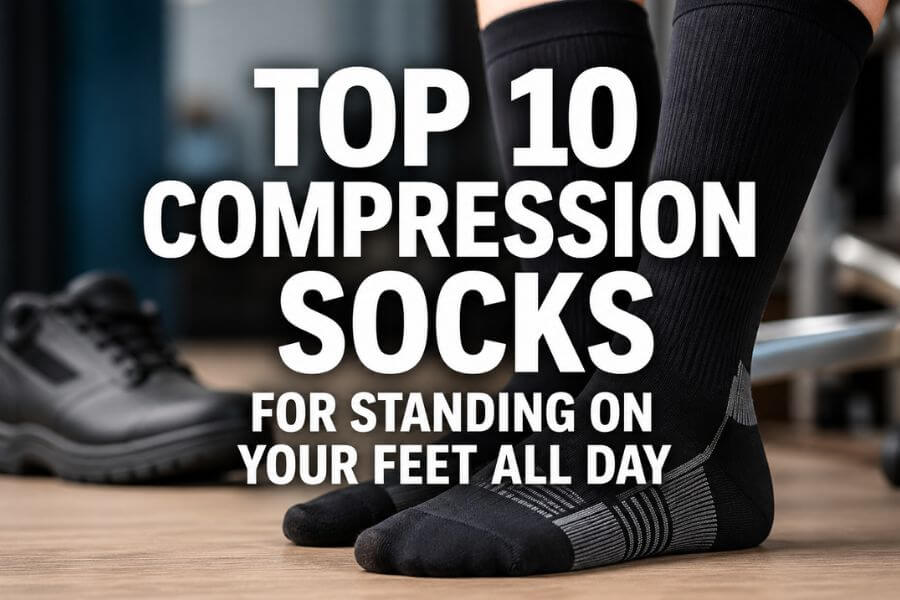
In this guide, you will discover the top 10 compression socks for standing on your feet all day. You will also learn how to choose the right pair and what features truly matter, so you can stay comfortable, supported, and focused on your day.
Quick Summary Table
| Rank | Product Type | Compression Level | Best For | Key Feature |
|---|---|---|---|---|
| 1 | Premium Graduated Sock | 20–30 mmHg | Long shifts | Strong support and durability |
| 2 | Lightweight Daily Sock | 15–20 mmHg | Beginners | Soft and breathable |
| 3 | Athletic Compression Sock | 20–30 mmHg | Active jobs | Moisture-wicking fabric |
| 4 | Wide-Calf Compression Sock | 15–25 mmHg | Larger calves | Stretch-friendly fit |
| 5 | Cushioned Work Sock | 20–30 mmHg | Hard floors | Extra padding |
| 6 | Budget Compression Sock | 15–20 mmHg | Everyday use | Affordable comfort |
| 7 | Stylish Compression Sock | 15–20 mmHg | Office wear | Fashion-forward design |
| 8 | Medical-Grade Sock | 20–30 mmHg | Circulation issues | Strong compression |
| 9 | Cooling Compression Sock | 15–25 mmHg | Hot environments | Cooling fabric |
| 10 | Travel and Work Sock | 15–20 mmHg | Versatile use | All-day comfort |
How We Ranked These
To help you find the best compression socks, we focused on real-world needs. Standing all day is different from short workouts or occasional wear, so we prioritized features that matter for long hours.
Here is what we looked at:
- Comfort for long wear: Socks had to feel good even after 8 to 12 hours. Soft fabric and proper fit were key.
- Compression effectiveness: We focused on graduated compression that supports circulation without feeling too tight.
- Breathability: Your feet should stay dry and cool, especially in warm environments or busy workplaces.
- Durability: Good compression socks should keep their shape and pressure after many washes.
- Fit and sizing options: We included options for different calf sizes and foot shapes.
- Cushioning and support: Extra padding can reduce impact when you walk or stand on hard surfaces.
- Style and versatility: Some socks are designed for work, others for everyday wear. We included both.
Now, let’s go through the top picks.
1. Premium Graduated Compression Socks (20–30 mmHg)
If you want strong support for long shifts, this type of compression sock is a top choice. It uses graduated compression, which means it is tighter at the ankle and gradually loosens as it goes up your leg.
This design helps push blood upward, reducing swelling and fatigue.
Why you will like it:
- Strong compression helps reduce leg pain
- Ideal for 10 to 12-hour shifts
- Durable fabric that lasts long
- Great for nurses, retail workers, and warehouse staff
Things to consider:
- May feel tight at first if you are new to compression
- Can take a bit of effort to put on
If your job keeps you standing all day, this is one of the most reliable options you can choose.
2. Lightweight Daily Compression Socks (15–20 mmHg)
If you are new to compression socks, starting with a lighter level is a smart move. These socks provide gentle support without feeling too tight.
They are perfect for everyday wear and for people who want comfort more than strong compression.
Why you will like it:
- Easy to wear and remove
- Soft and breathable material
- Good for mild swelling and fatigue
- Comfortable for all-day use
Things to consider:
- Less support compared to higher compression levels
This is a great entry-level option if you want to try compression socks without committing to strong pressure.
3. Athletic Compression Socks (20–30 mmHg)
These socks are designed for active movement. If your job involves walking, lifting, or constant motion, this type can keep up with your pace.
They often include moisture-wicking fabrics to keep your feet dry.
Why you will like it:
- Keeps sweat away from your skin
- Provides firm support during movement
- Helps reduce muscle fatigue
- Great for busy and fast-paced jobs
Things to consider:
- May feel slightly thicker than basic socks
If you move a lot during your shift, this option can help you stay energized longer.
4. Wide-Calf Compression Socks
Finding the right fit is important. If you have wider calves, standard compression socks may feel too tight or uncomfortable.
Wide-calf options are designed to stretch comfortably without losing their compression benefits.
Why you will like it:
- Better fit for larger calves
- No pinching or rolling down
- Maintains proper compression
- Comfortable for long hours
Things to consider:
- Slightly limited style options compared to standard sizes
A proper fit makes a huge difference, so this type is worth considering if standard sizes do not work for you.
5. Cushioned Work Compression Socks
Standing on hard floors can be tough on your feet. Cushioned compression socks add an extra layer of comfort.
They combine support with padding, which helps absorb impact.
Why you will like it:
- Extra cushioning reduces foot pain
- Great for concrete or tile floors
- Supports both feet and legs
- Ideal for long shifts
Things to consider:
- Slightly thicker, which may feel warm in hot environments
If your workplace has hard surfaces, this option can make a noticeable difference.
6. Budget-Friendly Compression Socks
You do not have to spend a lot to get decent compression. Budget options can still offer comfort and basic support.
They are great if you want multiple pairs for daily use.
Why you will like it:
- Affordable price
- Good for daily wear
- Easy to replace
- Available in multi-packs
Things to consider:
- May wear out faster
- Compression may not be as strong
This is a practical choice if you want value and convenience.
7. Stylish Compression Socks
Not all compression socks look medical or plain. Some are designed with colors, patterns, and styles that fit your wardrobe.
You can wear them at work without sacrificing your look.
Why you will like it:
- Attractive designs
- Suitable for office environments
- Same comfort with better style
- Boosts confidence while wearing
Things to consider:
- Often lower compression levels
If appearance matters to you, this type lets you stay comfortable without compromising your style.
8. Medical-Grade Compression Socks
These socks provide higher levels of compression and are often used for more serious circulation concerns.
They are ideal if you deal with frequent swelling, varicose veins, or leg fatigue.
Why you will like it:
- Strong support for circulation
- Helps reduce swelling and discomfort
- Long-lasting compression
- Recommended for heavy daily use
Things to consider:
- Can feel tight if not properly sized
- May require getting used to
If you need serious support, this is one of the best choices available.
9. Cooling Compression Socks
Working in hot environments can make your feet feel sweaty and uncomfortable. Cooling compression socks use special fabrics that help regulate temperature.
Why you will like it:
- Keeps feet cool and dry
- Lightweight and breathable
- Comfortable in warm conditions
- Reduces odor buildup
Things to consider:
- May offer slightly less cushioning
If you work in a warm place, this option can help you stay comfortable all day.
10. Travel and Work Compression Socks
These socks are designed for versatility. You can wear them at work and also use them for travel or long flights.
They offer balanced support and comfort.
Why you will like it:
- Multi-purpose use
- Moderate compression level
- Comfortable for long hours
- Easy to pack and carry
Things to consider:
- Not as specialized as other types
If you want one pair that works in different situations, this is a smart pick.
Conclusion
Standing on your feet all day can take a toll on your body, but the right compression socks can make a big difference. They help improve circulation, reduce swelling, and keep your legs feeling lighter and more energized.
When choosing the best pair, think about your daily routine. If you work long shifts, stronger compression may be better. If you are new to compression socks, starting with a lighter option can help you adjust. Comfort, fit, and breathability should always be your top priorities.
Investing in a good pair of compression socks is not just about comfort. It is about protecting your legs and making your workday easier. Once you find the right pair, you may wonder how you ever managed without them.
Frequently Asked Questions
What compression level is best for standing all day?
For most people, 15 to 20 mmHg is a good starting point. If you need more support or have swelling, 20 to 30 mmHg is often more effective.
How long should you wear compression socks during the day?
You can wear them for your entire shift. Many people wear them for 8 to 12 hours. It is best to remove them before sleeping unless advised otherwise.
Can compression socks prevent foot pain?
Yes, they can help reduce foot and leg pain by improving circulation and reducing pressure buildup. However, proper footwear also plays an important role.
How do you know if your compression socks fit correctly?
They should feel snug but not painful. There should be no numbness, tingling, or deep marks on your skin. A proper fit should feel supportive and comfortable.
How often should you replace compression socks?
Most compression socks should be replaced every 3 to 6 months, depending on how often you wear and wash them. Over time, they lose their elasticity and effectiveness.